About Bhavin Gandhi
With MBA and Masters in Computer Science, Bhavin Gandhi has over 18+ years of business experience in various aspects of Leadership and Management roles in private and public organizations. Through his blog, Bhavin tries to help people to better manage, lead and organize their businesses and lives, in the 21st century.
 Leadership’s perception is the key in deciding how effective is your leadership. If your team has the wrong perception of your leadership style, and if they do not consider all of the external factors that shape your leadership style, then they might cause few negative consequences for the organization and yourself. Thus, it is very essential to look at your leadership style from your team member’s perspective. And hence, I will provide you with few methods through which you can measure your leadership perception in the eyes of your team.
360-degree review: In order to get an unbiased feedback from your team about your leadership style, you need to find appropriate methods for soliciting that feedback. And the best way to get that feedback is by initiating a 360-degree review of your leadership performance and ability. I would advise you to coordinate with your manager or Human Resource representative to ensure that the process is carried out professionally and in a manner suitable to your workplace. Be sure to solicit and include multiple peers from a variety of sources to get as many perspectives as possible. If you have a small HR department in your company, or if you don’t have enough resources to do a 360-review, then you might want to try creating a free survey on a website like SurveyMonkey with specific questions related to your leadership style.
One-on-one: Another method through which you can get an unbiased feedback from your team regarding your leadership style is through one-on-one meetings with your team members. I would advise you to coordinate a series of one-on-one candid discussions with the people you respect as leaders and your team. From the feedback of those leaders, who have a vested interest in developing you as a leader in your organization, you can get some advice or experience that may be valuable to help you grow as a leader. While the feedback from your team members will help you to understand what works and what doesn’t work in your existing leadership style, so that you can tweak your current style to become a better leader.
Customer feedback: Customers are the reason why we are here. And hence, it is very critical to obtain your customer’s feedback to get an outside perspective of how you lead your team. What does the customer feedback say about you as a leader? Are customers willing and eager to work with your team? Are the objectives clearly defined to achieve the desired end results? Does the customer see you as an advocate for your team and your organization? How do you perform in crisis management situations? If you don’t directly interact with the end consumer of your end product, then get the feedback from the team that you support.
Have you ever found the need to measure your leadership perception? If so, what other methods have you used to gauge your leadership perception in the eyes of your team?
Thanks – Bhavin Gandhi
Tags: 21st century, 360 degree, Become the best manager, Customer feedback, Employee feedback, Know your leadership style, Know yourself, Leadership, Leadership of tomorrow, Learn from your mistakes, Management, Manager's feedback, Self awareness
 One of my friend headed the quality function at a medium-sized durable goods company. And once he got a job offer as a general manager in one of its largest plant, he jumped on the opportunity. After briefly examining the new plant, he declared it outdated and went on to rebuild it from ground up. But while doing this, he neglected the importance of understanding the current processes, and interpreted employee’s silence as agreement. No wonder, his idea was not accepted positively. And soon after the new plan was put in place, productivity plummeted and quality suffered.
In order for you to not repeat this mistake, you need to first try to learn the existing operations of the team, strengthen your relationships with the team members, and then try to make changes to the process. In this blog, I will provide you with few tips through which you can accelerate your learning process about the current processes/procedure of your team.
Ask your people: The simplest method to learn the workings of your new team is to ask your people. You would be surprised by knowing how much of the knowledge your new team has to share. Don’t be afraid of looking foolish, while asking very basic questions to your team. I would recommend you to ask these questions during your one-on-one session with your employees. In this way, you will still get the information that you need, without getting embarrassed in front of many people (if you ask any foolish questions).
Train yourself: Another method to quickly familiarize yourself with the existing processes of your new team is to treat yourself like a new employee. I would recommend you to have few days allocated solely to train yourself. During these days, you should work with your team as if you were a new employee joining the team, and tell them to run the show. By doing this, you will not only learn the existing processes of your team but you will also earn the trust of your team by showing them you care about them. Worst come worst, you will be in the position to define the training guide for the new employee joining your team.
Learn from documents: If I were you, I would invest some good amount of time going through all the documentation of the team before I ask someone. In this way, you can learn about the workings of your team without looking foolish in front of someone. This will also give you an opportunity to familiarize yourself with the document standards of your new team, so that you can follow these standards while changing the documentation, if you choose to change the existing process.
I hope, this blog helps you to accelerate your learning process while understanding the workings of your newly acquired team. If you were in the similar situation like my friend, what would you have done?
Thanks. – Bhavin Gandhi.
Tags: 21st century, Change Management, First time manager, Leaders of Tomorrow, Leadership, learn from documents, learn from people, learn from your employees, Manage Change, Management, Management Style, Manager Training, Manager's Guide, Manager's Note, Self improve, Self learning, The best leader, Train yourself

Marissa Mayer might be under scrutiny by many of her employees due to her recent decision of ending ‘work from home’ culture in Yahoo, Inc. Though I am not aware of those extreme circumstances under which she needed to take this drastic step, I can say this for sure….’work for home’ culture is not for every organization. Don’t get me wrong, I am all for workplace mobility, when required. But some of the organizations are just not made to support ‘work from home’ culture. Thus, in this blog I will provide you few reasons for NOT having ‘work from home’ policy in your organization.
Depends on your business needs: Not every organization can afford to have the popular culture of telecommuting. Sometimes the business need, itself, won’t allow you to implement this culture in your company. Let’s say, you own an Apple Store. Are you going to be able to make your “Genius” employees work from home? Though these technicians can resolve people’s technical issues over the network, it is a strategic disadvantage for them to do so. Apple Store is widely known for its best customer support. And hence, the business need requires their employees to have some face time with their customers and develop that strong customer relationship to promote their brand.
It’s not for every company: Some people just can’t communicate well over the messenger, email or phone. There can be various reasons for this situation including lack of training, stagnant workforce, availability of appropriate tools, etc. Nonetheless, if your current workforce and your current company culture can’t support the initiative of working from home, then it might not be for your company. If some of your employees are not self-starters, and if they need someone to hold them accountable, and can’t be motivated themselves at home, then they need to work in the office. OR If you have some of those employees in your team for whom ‘work from home’ is the other name for a ‘vacation’, then this is definitely not for your company.
You lose the human touch: While communicating over a phone or a video conference provides your team the flexibility to join the meeting from anywhere, it comes with the dual edge sword. With the virtual nature of the communication for a ‘work from home’ team, it becomes challenging to schedule a meeting, since your team member have to wait for other people to come back to their IM client so that they can communicate. Also, written communication over e-mail or the verbal communication over the phone can create many inter-personal conflicts due to misunderstanding, which taking long time to resolve them. With written communication being so inefficient and passive, it might not be a good idea to go with the ‘work from home’ culture, if your employees are not ready for it yet.
Can create security concerns: I know, we have the latest technology today with the VPN connection and the secured channel communication. But as the technology advances and becomes complex, it becomes very difficult to address these security concerns remotely. No matter how strong is your office network, if your employees are working from home, your company can be exposed to various security loopholes. If you don’t have adequate IT support to address these security concerns for the people who work at home, then you might want to wait before implementing a ‘work from home’ policy in your company. Internet security is not the only problem. When your employees work from home they are exposed to various other security issues like their laptop getting stolen, having their password getting hacked due to lose WiFi network key, etc. Obviously, these issues will be less frequent if all of your employees work in the office, instead of their less secured home environment.
So, what do you think about my argument? Do you know any other situations in which you should not allow your employees to work from home?
Thanks – Bhavin Gandhi
Tags: 21st century, Cultural Change, internet, Leadership, Leadership Failures, Management, Marissa Mayer, Micromanagement, Remote Teams, technology, Virtual Team, Work culture, Work from home, Work remotely, Yahoo
 If you are a Director or a Sr. Manager, who is involved in managing the front line managers, then this blog is for you. I agree that senior management’s role is very crucial and busy, and maybe that’s the reason why you can’t allocate enough time to coach your front line managers. But avoiding coaching/mentoring your front line mangers will create disastrous situations in the future. Your front line managers require more coaching than any other employees in the organization, since they define the culture of your company. In this blog, I will provide you with few pointers to coach your frontline managers effectively.
- Provide them training: If you are super busy with your day-to-day activities, and if you are unable to provide coaching to your managers, then please take the benefit of some external trainings. Most of the bigger companies (employees 1000+) have these kind training classes established in-house for their front line managers. So, make sure that your managers go through these training opportunities. While internal training is crucial for every company, not every company can afford to have internal training programs. In this case, you can partner up with few consulting companies to provide similar training opportunities to your front line managers. While selecting those external training programs, make sure that those programs match your company’s culture and working style.
- Help them build a network: In a senior management role, you should always encourage your front line managers to network with the key people from your company. By doing this, their area of influence will increase and they will become more independent to do their work. Thus, you should always help them to broaden their exposure within the company by visiting different areas of the company with them, or by introducing them to the new people within your organization. Your work doesn’t get done after an introduction, you need to help them to find opportunities to represent their part of the organization to others. In this way, they can be encouraged to discuss strategic issues and share the information with other management personnel.
- Reinforce your culture: Line managers are the one, who will define the culture of your organization. After all, they work at the root level. And hence, it becomes very important to ensure that they are embedded in your organizational culture. In order to reinforce your values, you need to teach them to respect and promote diversity in all areas and jobs in the company (if your company is diverse). You might want to have the discussion during your one-on-one session on how their behavior makes a difference in the organization. Sometimes, it is very important for you to provide them with ongoing information about the people, culture, and history of the organization. Reinforcing these values frequently through your one-on-one sessions or your interactions with them will ensure their growth with the company.
- Encourage them: I know, this sounds very simple, but this is very crucial part of the coaching. You need to help your line managers to learn how to deal with and manage ambiguity. Being in the senior leadership role, we always expect our line managers to get everything right. But that may not be the case always. And hence, you need to embrace their failure and provide them encouragement during those situations. I am not telling you to agree with their failures all the time, but have the behavior where they can come to you if they failed. You should also encourage them in their efforts to sponsor and develop potential leaders in the organization. After all, it will help your organization to become better. And yeah! When appropriate, offer feedback, support, and “push back”.
I hope, these tips will help you to better coach your front line managers in your team. So, what would you do to coach your front line managers in your team?
Thanks. – Bhavin Gandhi.
Tags: 21st century, Coa, Coaching managers, Communication with employees, employee development, Employee engagement, Employee growth, Empowerment, Leaders of Tomorrow, Leadership, learning and development, Management, Management Style, Manager, Manager Training, Manager's Note, Mentor your managers, Mentoring, Performance Management, Supporting your managers, Train your employees
 Most of the managers think that their experienced employees, who are in their team from a long time, doesn’t require any coaching. If you are one of those managers, then let me stop you right there. You are completely wrong. In fact….your experienced employee will require more coaching than your new employee, since he is the one who will be defining the normal of your team, and maybe, become a mentor to your new employee. Right? Obviously, you will require a different coaching style to coach your experienced employee as compared to your new employee (as I have indicated in my last blog). Thus, in this blog I will provide you with few pointers to coach your experienced employees.
Before I provide you with any strategies to coach your experienced employee (Mr. Y), let’s define what we expect from our experienced employees………We expect our experienced personnel to work on special projects and expand their circle of influence outside of your team, so that they can resolve few mission critical issues without your intervention. We also expect them to take ownership of few projects, and solve mission critical issues on their own. Some of the other expectations would be……training a new hire, defining new processes to improve efficiency, etc. Am I right?
Since we depend on our experienced employees to get the job done and improve the productivity of our team, their coaching style needs to be very personalized and effective. Following are few strategies that I use with my experienced employees…….
- Provide exposure: Since you already depend on Mr. Y; wouldn’t it be nice, if he can communicate directly with the cross functional team members, so that you can get the expected results? In order for Mr. Y to communicate with appropriate members from other teams, you need to provide him with various opportunities to work on cross-functional team. You can also provide company-wide exposure by introducing him to persons and areas beyond his current expertise. Sharing your larger network with him would be even better.
- Provide time: Let’s say, you give Mr. Y with the responsibility to lead a project from development to implementation, or provide him with the opportunity to coach others. In both of these cases, you need to be slightly patient to see the outcomes from those efforts. Since, these responsibilities are very new for him, he will take some time to learn and adjust to these responsibilities. Hence, don’t be frustrated, if you don’t see quick results. Provide him with some time to adjust to these new responsibilities, while closely monitoring his progress and providing needed help along the way.
- Teach them to delegate: Since Mr. Y is an experienced employee, you might be using him for very special projects, and hence, his knowledge might be very specialized and rare. In order to coach him effectively, you need to teach him how he can delegate his tasks and transfer his knowledge. You need to encourage him to “let go” his activities and expertise to give others the opportunity to be an “expert”.
- Provide training: You should involve your experienced employee in the selection, development and planning efforts, so that he can learn your style of decision making, and hopefully, use that knowledge to make future decisions on his own. His involvement in decision making will not only help you to get better informed with the day-to-day issues on the line, but it will also give him the opportunity to learn how mission critical decisions are taken. If your employee is inexperienced in coaching others, co-coach your new employees with him. This will give him the confidence in coaching others, while improving your trust relationship with him.
I hope, these tips will help you to better coach your experienced employee in your team. Stay tuned for my next blog, where I will provide you with some pointers on how to coach your managers. In the meanwhile, if you have any other ideas through which you can provide effective coaching to your experienced employees, then please feel free to share it here.
Thanks. – Bhavin Gandhi.
Tags: Coach experienced employees, Coaching, Communication with employees, employee development, Employee growth, Leaders of Tomorrow, Leadership, Management, Manager Training, Manager's Guide, Mentor your go-to employees, Performance Management, The best leader
 One of the most important duties of a Manager/Leader is to coach their employees to get the desired business results. Like….one management style doesn’t work for everyone, one coaching style doesn’t function for everyone. Depending on your employee’s experience and historical background, you have to customize your coaching style to get the best out of themselves. Right? In this blog post, I will provide you with few pointers through which you can effectively coach your new hire.
Before I provide you with any strategies to coach your new employee, let’s find out few challenges that they would face as a new hire………As a new hire, your employee (Mrs. X) would require clear direction on what she is supposed to do, right? She will also need some clearly defined work assignments, where she can get herself acquainted to your company and its processes, am I not right? Obviously, she is new to the company, so she will also need your help to expand her circle of influence to get the work done.
Since, we are clear on what challenges she would face as a new employee in your team, now we can go ahead and define some coaching strategies. Following are few strategies that I use with my new hire…….
- Frequent feedback: As a new employee, she would not know if she is doing the assigned task appropriately and up to your expectations. And hence, providing frequent reviews and feedback is a must.
- Set clear expectations: In order to make sure that she can be productive quickly, you need to provide clear and detailed instructions for every basic tasks that you assign to her. It would be better for you, if you can provide her with smaller projects with clearly defined start and end times. This will make sure that you educate herself with your team’s processes while meeting your productivity targets at the same time.
- Ask questions: In order to make sure that you are strengthening your relationships with your new employee and she is getting all the information that she needs, you need to regularly ask her questions. Questions like……. “How are you doing?”, “Do you have time for lunch?”, and “How do you like our team?” will help you to strengthen your relationship with her and to build your initial trust. On the other hand, questions like…….”Are you getting the information you need?”, “Are you meeting the right people?”, and “Let me know, if you need anything” will help her to make sure that she gets the work done.
- Assign a coach: Obviously, you would be introducing her to your team and encouraging her to increase her circle of influence within and outside of your team. But sometimes that is not enough. You need to explicitly assign a member of your team, who is willing to coach her. This strategy will not only help her to get herself acquainted with your team’s processes, but it will also give your experienced employee an opportunity to showcase his talents to you. With an explicit coach assigned to her, she can now learn your processes, languages, and acronyms used in your area without your explicit time given to her.
I hope, these tips will help you to better coach your new hire in the team. So, what would you do differently to coach your new employee? Do you have any other ideas to effectively coach your rookie?
Thanks. – Bhavin Gandhi.
Tags: Coaching, Communication with employees, employee development, Employee growth, Leaders of Tomorrow, Leadership, Management, Manager Training, Manager's Guide, Performance Management, The best leader
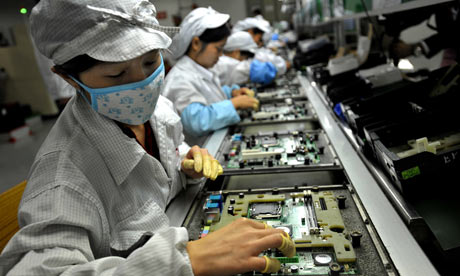
 My first real exposure to China and Chinese employees was in the early 2009, when my company decided to open its research and development center in Beijing, China; and put me in charge of newly developing system automation team in China. Since then, I have worked with Chinese employees extensively, either it’s at my current job or at some of the smaller companies that I have consulted over the years. Though I am still in the process of learning more about the Chinese culture, one thing is clear, the leadership style of the Western Countries is not effective when you work with Chinese employees. Thus, in this blog post, I would provide you with some insight on how to effectively lead your Chinese employees.
Management style: In developed countries like the United States, we provide opportunities to our employees to resolve problems/issues by themselves. While this kind of strategy (delegate and disappear) is very effective in developed countries, it doesn’t work well with Chinese employees. Chinese people are very traditional, they respect authority and are introverts in some cases. So, they will depend on you to take critical decisions of the project that you have assigned to them. In order to work better with them, you might want to …….(1) Stop by their desk or video conference them at least 1-2 times a day, and ask for blocking issues with their projects ……….(2) Have frequent team meetings to go over critical issues …….(3) Make their introductions to all of the stakeholders of the project, so that they can feel comfortable going to them directly instead of coming to you for smaller issues ………(4) Develop personal relationships with them. Strong relationships can help you go a long way.
Obtaining Information: Similar to adjusting your management style, you might need to change the way you communicate. Let’s say, if you are trying to get some information from a Chinese manager, and if this is your first time communicating with him, then you might want to utilize your contacts at similar levels in the organization to get that information. In most of the cases, information may not flow downward through the hierarchy as easily as one might expect, when the culture of the company is less hierarchical. In order to get the correct information on the right time, you might want to cultivate your informal contacts within your Chinese branch. And yeah! Always make sure to rephrase your understanding of the issue/solution, once you get the desired information. This practice will ensure that you are on the same page with your Chinese counterparts. Sometimes, language barrier can create various problems.
Presenting Information: Chinese culture is very status-oriented. Let’s say, you are a manager in the US company, who manages the offshore team of 10-12 Chinese employees. Now, assume that you want to change your current process. I bet you……when you will present your new plan to these employees, you will get very minimal or no feedback. Due to their status-oriented culture, there may be less feedback from the audience during a presentation than one might expect in a more equality-focused culture. And hence, I would recommend you to give them the opportunity to provide their feedback later through an e-mail or an anonymous forum. In most of the cases, they feel very comfortable in providing their feedback to their superior in a private setting as compared to a public setting.
I hope, these tips can help you to become a better manger, when you are working with a Chinese team. What other changes would you make in your management style, while working with Chinese employees?
Thanks. – Bhavin Gandhi.
Tags: 21st century, Asian Culture, Asian Employees, Change your work style, Chinese Employees, Clear expectations, Culture Awareness, Information Presentation, Leaders of Tomorrow, Leadership, Leadership Failures, Manage Chinese Employees, Management, Management Style, Manager, Obtaining information, Presenting information
 Times are tough, and it is becoming very difficult to find the right job. On top of this challenge, its becoming very hard for a candidate to differentiate himself/herself in comparison of thousands of out-of-job workers. In this market, the candidate needs to be very intelligent with his job search. And hence, I will provide you with few tips through which you can land your dream job easily.
Cleanup your web presence: In today’s day and age, most of the employers will check your online profile before inviting you for an interview. And hence, it becomes very critical for you to cleanup your online presence. I would recommend you to Google yourself before applying for any position. If you find any unprofessional photos/comments of yourself, please try to remove it from your profile or change the privacy settings.
Do your homework: Technology had made it easier for your future employer to know everything about yourself before they even interview you. I think, we should use the same technology strength to prepare ourselves for the interview. If you are invited for an interview, you should research everything about the company, the job profile, and the culture. You can showcase this research through your carefully designed answers to their questions, which should connect your answers with the research you have done. On every occasion, you should share what you know about the company and why the company should hire you above others.
Use common sense: Other than few expected behaviors like…..arriving 10-15 minutes early; not chewing gum; leaving all food and drink outside; cutting back on the cologne and perfume; and dressing professionally………you should always bring 3-4 extra copies of your resume. You should also carry 3-4 copies of your portfolio displaying basic design of your process flows (if you worked in manufacturing) or architecture of your software (if you worked in software development) or similar work samples related to your area of work. And yeah! Don’t forget to take notes.
Always follow-up: Even if you are not interested in the job after interviewing with them, you should still follow-up with them to maintain the relationships by kindly declining the job. I always followed up by showing my interest in the job at the end of the interview, and also by writing a thank you letter to reaffirming my interest in the position. In all of my follow up conversations, verbal or written, I have always ensured that I connect my experience with the company’s culture and the position description.
Though these are very simple pointers; if you play your cards right, you should be able to get your dream job through these pointers. What other tips do you have to differentiate yourself from other candidates? Would you recommend any other suggestions to get your dream job?
Thanks. – Bhavin Gandhi.
Tags: 21st century, Find a job, Get a job, Interview, Job Interview, Job search, Leadership, Management, Market yourself, Resume, Self improvement, Self learning
 Have you ever been in an e-mail chain where more than 10 people were addressed in the e-mail, but no one knew who is going to respond? If you are a manager or in a similar position, then you must be getting these kind of e-mails at least once in a day. Isn’t it? Actually, this situation is very common than you might think. On an average, 70% of the e-mails in the work place are targeted to the wide audience to get some people’s input, while notifying others at the same time. And that’s where the problem occurs. Since there are multiple users involved in ‘cc’ of the e-mail, all of them think that someone will respond, and at the end, no one ends up responding. In order to avoid those situations, and get quicker response to your emails, I am providing you with few tips on writing effective e-mails.
Use appropriate subject line: You must have been through the situation, where one e-mail might have been forwarded and replied so many times that its subject line doesn’t have any value anymore. Isn’t it? Let’s say, you get an e-mail from one of your employees (Mrs. X) regarding the issue that she found during her testing. The subject line of that e-mail might be “Issue found during testing XYZ product”. After few to-and-from communication with engineers about this issue, you forward this issue to the product manager for prioritizing the resolution of this issue. In this situation, product manager might take few hours or an entire day, before he can respond to this e-mail. Reason being…..from the subject line, this e-mail didn’t seem important to him. And hence, whenever you are forwarding an e-mail to someone, please change the subject line to target your responder. If you would have changed the subject line to “Prioritizing issue resolution for XYZ product”, then you might have got a quicker and descriptive response.
Highlight names: Let’s consider the same example given above. Let’s say, you want to forward this e-mail to the product manager and the engineering manager for their specific responses, and you also want to include 4-5 engineers in ‘cc’ of that e-mail to keep them informed about the resolution. And your e-mail description might say something like “how do we prioritize the resolution for this issue?”. Since, this e-mail is directed to so many people at the same time, you might not get any clear response, since people will wait for others to respond. Let’s say, you would have wrote this instead……”@Steve: How should we prioritize this issue? @David: Is it possible to fix this issue in our next release of the product?”. I am sure, your response would have been more clearer, since you have targeted your questions to each individual included in the e-mail. Thus, I would always recommend you to target your responders by their name, if you are expecting them to provide their input.
I hope, these tips will help you to draft an effective e-mail, so that you can get your responses quickly and easily. Do you have any similar ideas through which you can improve your e-mail communication?
Thanks. – Bhavin Gandhi.
Tags: 21st century, Business Communication, Communication, E-mail, E-mail Communications, Information Technology, Leadership, Management, Manager, Self improvement, Self learning, Written Communication
 After seven years in software development at a San Francisco based e-commerce company, my friend (let’s call him Mr. X) was promoted to his first manager’s position as an Engineering Manager. Up to that point, his track record had been stellar. His intelligence, focus, and determination had won him recognition and various promotions in his organization.
When his company assigned him to be the engineering manager for one of the company’s hottest new products, he ran into trouble early on. Mr. X’s past successes were due to his extraordinary technical leadership and programming capabilities. Accustomed to programming, he was a control freak and had the tendency to micromanage. His efforts to micromanage the engineering team alienated them. And within few months, Mr. X was back as being a technical leader (sr. programmer) and someone else was leading the team.
Mr. X failed as an engineering manager because he was unable to make the transition from being a strong individual programmer to an engineering manager. He failed to grasp that the strengths which had made him successful during his sr. programmer role could be liabilities in a role that required him to lead an engineering team by trusting their programming skills instead of doing it yourself.
What might Mr. X have done differently? He should have focused on mentally promoting himself into the new position, a fundamental challenge for new leaders. The one thing to remember is…………..you can’t become successful in your new job as a manager by continuing to do what you did in your previous position as an individual contributor.
Since you might have been promoted due to your skills and accomplishments, it is only human to think that your senior management wants you to do what you were good at. Maybe that’s the only reason why you might live in the denial, and believe that you are being productive and efficient, if you continue your old behavior. But instead of continuing your responsibilities as an individual contributor, you need to prepare yourself mentally to move into your new role by letting go of the past and embracing the imperatives of the new situation to give yourself a running start. This can be hard work, but it is essential that you do it.
I hope, this blog comes to you as a reminder to forget what you knew, and try adapting yourself to the new management role that you have inherited. What would you do in this situation, if you were to be promoted to your first ever management job?
Thanks. – Bhavin Gandhi.
Tags: 21st century, Change Management, Clear expectations, First time manager, Leaders of Tomorrow, Leadership, Leadership Failures, learning and development, Management, Manager Training, Manager's Guide, Manager's Note, Performance Improvement, Performance Management, Self learning

 Leadership’s perception is the key in deciding how effective is your leadership. If your team has the wrong perception of your leadership style, and if they do not consider all of the external factors that shape your leadership style, then they might cause few negative consequences for the organization and yourself. Thus, it is very essential to look at your leadership style from your team member’s perspective. And hence, I will provide you with few methods through which you can measure your leadership perception in the eyes of your team.














 Bhavin Gandhi's Blog