RSS

Category Archives: AI Leadership

AI is Breaking the Illusion of Engineering Velocity

AI is Breaking the Illusion of Engineering Velocity

For most of my career, I have been deeply involved in guiding product, engineering, design, and program teams to accelerate their growth through a data driven approach. If I look back, a big part of my role was helping teams understand how fast they were moving and where they were getting stuck. I worked with multiple teams and workstreams, tracking their velocity, reviewing pull request timelines, and connecting code check-ins to actual feature releases. The goal was always the same, to figure out where things were slowing down and what was getting in the way.

Over time, I built frameworks around common product and engineering operational metrics from story points, sprint burndowns, capacity charts, to PR cycle times, and more. These frameworks weren’t just about tracking numbers; they were used to drive conversations and actions. At the leadership level, especially with Executive Leadership Teams (XLT) and the C-suite, these metrics helped tell a story that progress was happening and that teams were moving in the right direction. I have seen this play out repeatedly across large organizations like Amazon, Facebook, GE, Schneider, etc. The scale varied, the tools were different, but the pattern remained the same.

Then AI entered the picture, and it started changing this dynamic in a very profound way. For the first time, the gaps between what teams reported and what was actually happening became much harder to ignore. Earlier, it was possible for teams to highlight improvements in velocity while delivery timelines kept slipping in the background. Dependencies would quietly pile up, and engineers would feel the pressure, but those signals often stayed hidden beneath layers of reporting. Now, with AI, these patterns don’t need someone to escalate them, they become visible on their own.

To put this into perspective, think about smaller, leaner organizations. In a team of 5 within a company of 50, if something slows down, everyone feels it immediately. There is no insulation, no layers to absorb the problem. The impact is direct and visible. But in large enterprises, those same problems are often diffused across multiple layers, making them harder to detect. AI removes that insulation. It surfaces patterns in a way that makes them almost impossible to overlook.

At its core, this change forces us to rethink what “flow” really means.Flow is not about how fast a team completes tasks. It’s about how smoothly work moves from an idea to actual impact. When you start looking closely, most flow problems are not caused by individuals. They come from the system itself. For example, there could be too many handoffs, too many approvals, too many hidden queues, etc. These issues build up slowly and are spread across teams and processes, which makes them very hard for humans to detect. We tend to focus on what is visible in front of us, but these problems live in the connections between steps.

This is where AI becomes incredibly powerful. AI is exceptionally good at spotting patterns that are distributed and slow-moving. Even at a tech giant like Amazon, I have seen AI uncover insights that would have taken months to identify manually. For example, it could highlight that a certain type of work consistently spends more time waiting than actually being built. Or that specific dependencies only create delays when they interact with quarterly planning cycles. These are not patterns that a single program manager could reliably detect on their own, especially at scale. But once AI is fed historical data, like cycle times, it can surface these insights almost instantly.

The real breakthrough, however, happens when teams change how they use AI. Thus, instead of using AI to simply track performance metrics like velocity or PR turnaround time, you should shift your focus on understanding behavior. Instead of asking, “How fast are we going?” or “What is our average velocity?”, leaders should start asking, “Why does work slow down?”, “Where exactly is it slowing down?”, and “What are the real bottlenecks in our system?”

When these answers are connected back to the data from tools like JIRA, Asana, Trello, or Monday.com, something interesting happens. Conversations change. I have seen this firsthand at Amazon. Within a single quarter, meetings evolved from being about defending estimates to being about removing friction. The tone changed from justification to problem-solving.

To make this more practical, I built an AI agent to bring this idea to life. My AI agent pulled in team data like JIRA movements, PR merges, review times, etc., and translated it into simple, plain-language insights about what was slowing teams down. Instead of showing a chart, it told a story. For example, it could say, “Work slowed because reviews were clustered toward the end of the sprint.” That single sentence made the problem feel real and actionable.

And the response from teams was immediate. Engineers started breaking their work into smaller pieces. They updated JIRA more consistently. They distributed reviews more evenly instead of letting them pile up at the end of the sprint. As a result, more work was completed within the sprint itself. What is important here is that the underlying data was not new, it was always there. But presenting it as a clear explanation, rather than a metric, drove faster behavioral change. A velocity chart alone would not have created that shift in such a short time.

This is why I strongly believe that AI accelerates speed in a very different way than traditional tools. It doesn’t just help teams move faster, it helps them see the truth earlier. And in engineering systems, that matters a lot. These systems rarely fail in obvious ways. They don’t break loudly. Instead, they degrade slowly and quietly over time.

AI brings that quiet degradation to the surface before it turns into a major problem. And that, more than anything else, is where its real power lies.


Tags: , , , , , , , , , , , , , ,

How AI is Redefining Product Management: From Writing PRDs to Rasing the Bar

How AI is Redefining Product Management: From Writing PRDs to Rasing the Bar

During my second week at Facebook, mid-pandemic, onboarding remotely into the VR org, I joined a product review where a PM spent more time challenging their own proposal than defending it. Before anyone else could question it, they walked through what might break, where adoption could fail, and what risks Legal or Infra would raise. By the time feedback started, most of the obvious objections had already been addressed. 

That was my first real glimpse into how the strongest product managers operate. They don’t just present ideas, they argue with them. I have seen similar behavior in startups, but there it usually comes from necessity, limited resources force sharper thinking. In Fortune 500 companies, this kind of rigor comes from discipline.

That’s where AI changes the game today. AI gives every PM a first-pass sparring partner, but only if you use it the right way. Today, most teams use AI to generate PRDs, architecture docs, epics, and user stories. That’s useful, but it misses the point.

The real leverage shows up when AI becomes the voice that challenges you: “Here’s what you might be wrong about.” It’s particularly effective at surfacing blind spots like downstream dependencies, operational risks, users you overlooked, or costs that don’t show up in feature narratives.

Over the past few years, I have coached many PMs to use AI differently. Instead of asking it to generate output, we trained AI to think like stakeholders. At Amazon, for example, we created detailed personas for 3rd party sellers, engineering leaders, legal, finance, marketing, and operations teams. PMs would then prompt AI to respond from those perspectives:

  • What would Legal push back on?
  • How would Finance evaluate this investment?
  • What risks would Operations flag?
  • What architectural dependencies could delay the launch?

Early on, the outputs had rough edges. But as models improved, this approach became increasingly powerful, because product decisions rarely live in isolation.

One PM I worked with used this exact approach while planning a new seller facing feature. On the surface, it looked straightforward, improving onboarding flows to increase seller activation. The PRD was clean, the metrics were strong, and engineering had already sized it.

Before finalizing, we ran the idea through stakeholder based AI prompts. When prompted as “Legal,” AI flagged a potential compliance issue with how seller data was being surfaced across regions. When prompted as “Finance,” it highlighted an unaccounted cost in supporting international payment reconciliation. And from an “Operations” lens, it exposed a spike in expected support tickets due to onboarding ambiguity in edge cases.

None of these were obvious in the original proposal. Catching them early avoided what would have likely been a delayed launch and a much more expensive fix post-release. That’s the real value.

Over time, PMs who use AI this way will produce sharper, clearer proposals, not because AI wrote them, but because weak thinking was exposed earlier, grounded in data and organizational context. Thus, AI becomes a forcing function for rigor. And that leads to a broader implication: Product excellence has never been about output volume. It has always been about decision quality and the outcomes those decisions drive.

AI is now raising the bar for decision hygiene and quietly exposing teams that rely on intuition without validation.


Tags: , , , , , , , , , , , , , , , ,

How AI Transforms Program Management: From Reporting to Strategic Partnership

How AI Transforms Program Management: From Reporting to Strategic Partnership

Early in my career at a couple of Fortune 500s, program management excellence often meant one thing: being able to produce a clean, defensible status report. Green boxes built credibility. Red ones triggered escalation. The irony was that by the time something turned red, everyone already felt the pain, the report simply made it official.

Fast forward to today, use of AI often exposes an uncomfortable truth: much of what we call program management has been information movement, not decision support. Startups figured this out long ago. They don’t have the luxury of formal status cycles; they rely on shared situational awareness. AI finally allows large organizations to do the same without collapsing under scale.

What changes is not visibility, but interpretation. AI is extremely good at synthesizing fragmented signals into a coherent story. That’s something PMOs have historically tried to do manually, often under time pressure and political constraints.

In most of these big tech giants, I have often seen programs where risk doesn’t emerge explosively, it creeps. A dependency slips a sprint. A scope assumption quietly changes. A team compensates heroically. None of this is “red,” but all of it matters. AI excels at spotting these slow burn patterns precisely because it doesn’t get tired, defensive, or distracted by hierarchy.

Thus, I have been extensively using AI into my day-to-day activities by replacing weekly status decks with weekly sense‑making narratives. Instead of asking teams to explain why something is red or green, I have been using Rovo and Cursor to ask questions like: What’s drifting from plan but not yet obvious? What commitments are most vulnerable if nothing changes? These questions provoke far better conversations, provide helpful insights to the leadership team, and help the core project team to maneuver challenges.

The practical change required to implement this workflow is surprisingly small. You just need to enable Rovo agent in JIRA, work with your teams to fix JIRA hygiene challenges, and connect Cursor with your Atlassian suite. Once you do the groundwork, you can then feed AI your existing artifacts like Jira updates, roadmap changes, sprint notes, and ask it to generate insights rather than summaries. You can then review these insights and share it with your teams. This workflow and its visibility will fundamentally change how your teams operate. Over time, teams will stop optimizing for optics and start optimizing for coherence.

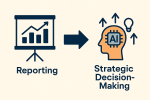
So, I strongly believe that AI won’t make program managers irrelevant, but it will make them more like strategists and less like couriers. The PMO of the future won’t be judged by how accurate its reports are, but by how early it helps leaders see reality and help them win through data driven decision making.


Tags: , , , , , , , , , , , , , , ,

New Operating Model for Product & Engineering Ops in the World of AI

New Operating Model for Product & Engineering Ops in the World of AI

When I first saw teams experimenting with AI before it became cool, the behavior felt really familiar. It reminded me of how teams treated Agile in the early days, something you “use/follow” rather than something that fundamentally reshapes how work flows. Teams were excited, curious, and well intentioned, but almost everyone was underestimating the change in front of them.

At larger enterprises like GE and Schneider, operations always lived a layer below the visible product surface. Customers never see the spreadsheets, the JIRA workflows, the dependency maps, or executive readouts, but those invisible systems determined whether strategy delivered the outcomes that we were looking for. AI is now inserting itself directly into that invisible layer.

Most teams today are using AI as a chatbot. They paste in meeting notes, ask for summaries, maybe generate a PRD draft or clean up status language. That’s fine, but it’s also like using a high performance engine only to power the radio. The real power shows up when AI becomes part of how decisions get made, not just how words get written.

I saw a version of this contrast clearly when working with startups versus large enterprises. Startups rarely debate whether a process is “ready.” They automate thinking early because speed leaves no alternative. In contrast, large organizations often wait for certainty, governance, and sign‑off, which delays leverage. AI flips this dynamic. For the first time, large companies can gain a startup‑like operational awareness without burning people out.

The biggest mental shift is this: AI is not just another productivity tool, it is an operating layer that sits between data and action. Every organization already has raw inputs: roadmaps, sprint plans, incident logs, metrics, emails, Slack threads. What most lack is synthesis at scale. Humans do this manually, inconsistently, and too late. AI changes that.

One of the most effective early experiments I have seen is when we stop asking AI to “do work” and start asking it to “explain the system.” Thus, I often ask questions like: What changed this week that mattered? Where are we accumulating hidden risk? What assumptions are we acting as if they are true, but haven’t validated recently? These questions help me sharpen my approach and provide insights that I can quickly review and validate with my organization’s strategy.

Another practical way to begin is to deliberately wire AI into your operating cadence. For example, before every weekly program review, I feed my model JIRA updates, dependency map, and roadmap changes. After that I ask it for a narrative and compare it against my overall understanding of the program. This approach has helped me cut down my manual tasks by almost 40%. Recently, I have started providing some additional context to my model and started asking it what tradeoffs it will make based on the information and using that to improve program’s execution. If you follow this approach, then overtime AI will become your partner and help you expedite decision making. 

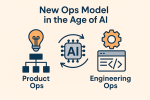
I believe that the teams that win with AI won’t be the ones who generate content faster. They will be the ones who design systems where insight appears earlier, decisions happen cleaner, and surprises shrink. This isn’t a tooling upgrade, it is an operating model shift.


Tags: , , , , , , , , , , , , ,